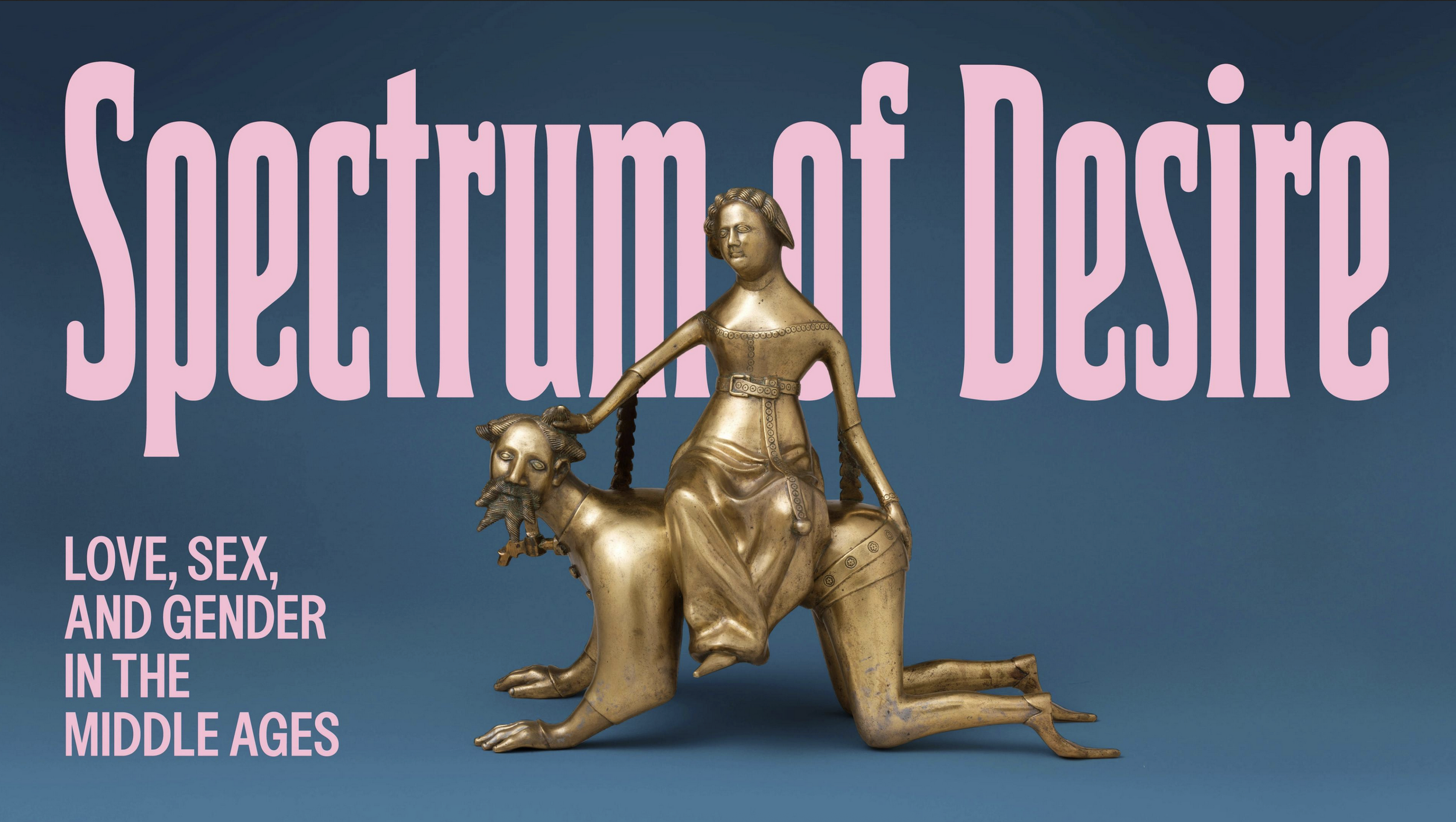
Stepping toward the arched stone entry leading into Spectrum of Desire: Love, Sex, and Gender in the Middle Ages, currently on view through March 29, 2026 at The Met Cloisters, I was struck by the way the physical design subtly hinted at the exhibition’s project of subversion and contradictions. Here, a lavish swath of deep turquoise taffeta drapes softly over the cool stone doorway, swept up and over to one side inviting visitors to enter while simultaneously defining the space within as something separate, different, perhaps even private.
As I followed my group beyond the curtain, the loose weave of the jewel tone silk turned almost translucent, catching the rays of light beaming through the narrow ancient windows at the opposite end of the gallery. An intimate fabric, the lush silk tempts as it conceals, like a canopy bed or the skirt of an elegant ballgown, setting the tone for a show that daringly challenges commonplace perceptions of the Medieval era as one defined solely by austere piety. Instead, Spectrum encourages visitors to consider the inhabitants of the time as real people with nuanced desires, motivations, and complex understandings of love, sex, and gender. In essence, revealing how the concerns around these subjects, which so many of us assume to be exclusively modern, were in fact deeply embedded in medieval thought, practices, and notably, its art…
Read MoreIn her lecture “On Beginnings,” collected in the book Madness, Rack, and Honey, the poet Mary Ruefle considers Gaston Bachelard’s idea that “we begin in admiration and end by organizing our disappointment,” which she simplifies even further into “origins (beginnings) have consequences (endings).” Pulled and paraphrased from Bachelard’s The Poetics of Space, where it originally referred to the practice of poetry and the ways we deal with the intrinsic inadequacies of language, it is a concept that can also be applied to an act even more mystical and bewildering: that of falling in love.
As Ruefle elaborates, “the moment of admiration is the experience of something unfiltered, vital and fresh” not unlike the sense of potential, amazement, and naivete with which one might enter a new romance. As the initial illusions fade and the realities make themselves known, the clarity afforded by disappointment becomes an opportunity to take agency and make decisions in marked contrast with the uncontrolled fall at the onset. Or as Ruefle puts it, a moment of “dignification” where the writer—or for our purposes, the lover—can take back control of the story.
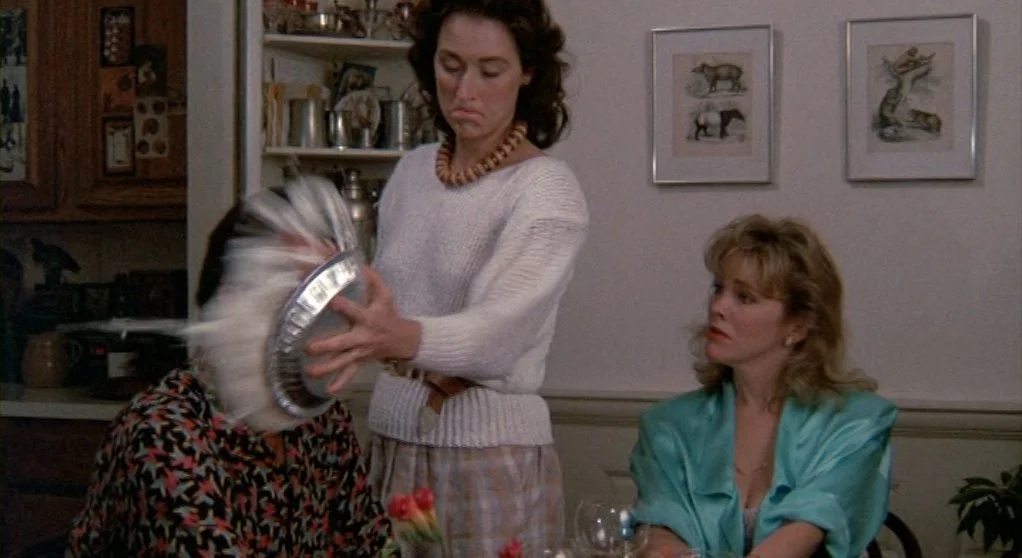
For writer and director Nora Ephron, dignifying the consequences of her origins meant using it as fodder for her literary work. From the Esquire magazine essays that pulled from her daily life to the dynamic romantic comedy heroines she wrote to deliver her personal philosophies on screen like Meg Ryan-shaped ventriloquist puppets, Ephron was an unapologetic miner of her own lived experience; a self-described “cannibal” who took her screenwriter mother’s adage to heart that “everything is copy.”
Read More