
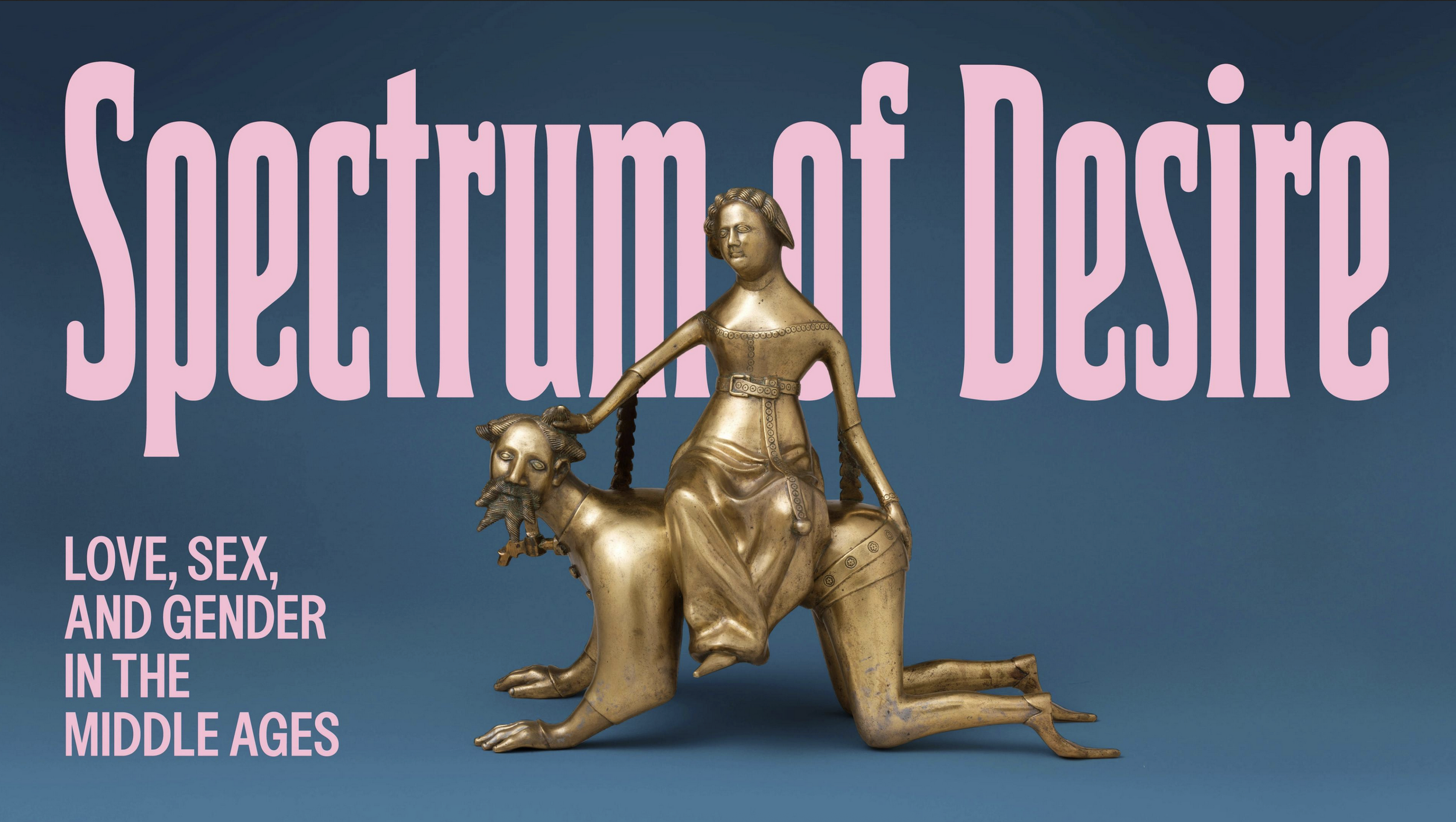
Stepping toward the arched stone entry leading into Spectrum of Desire: Love, Sex, and Gender in the Middle Ages, on view through March 29, 2026 at The Met Cloisters, I was struck by the way the physical design subtly hinted at the exhibition’s project of subversion and contradictions. Here, a lavish swath of deep turquoise taffeta drapes softly over the cool stone doorway, swept up just enough to allow visitors to enter, while simultaneously defining the space within as something separate, different, private.
As I passed through, the loose weave of the jewel-toned silk turned almost translucent, catching the rays of light beaming through the narrow ancient windows of the apse at the opposite end of the gallery. An intimate fabric, lush silk tempts as it conceals, like a canopy bed or the skirt of an elegant ballgown, setting the tone for a show that daringly challenges commonplace perceptions of the Medieval era as one defined solely by austere piety. Instead, Spectrum encourages visitors to consider the inhabitants of the time as real people with nuanced desires, motivations, and complex understandings of love, sex, and gender. In essence, revealing how the concerns around these subjects, which so many of us assume to be exclusively modern, were deeply embedded in medieval thought, practices, and notably, its art.
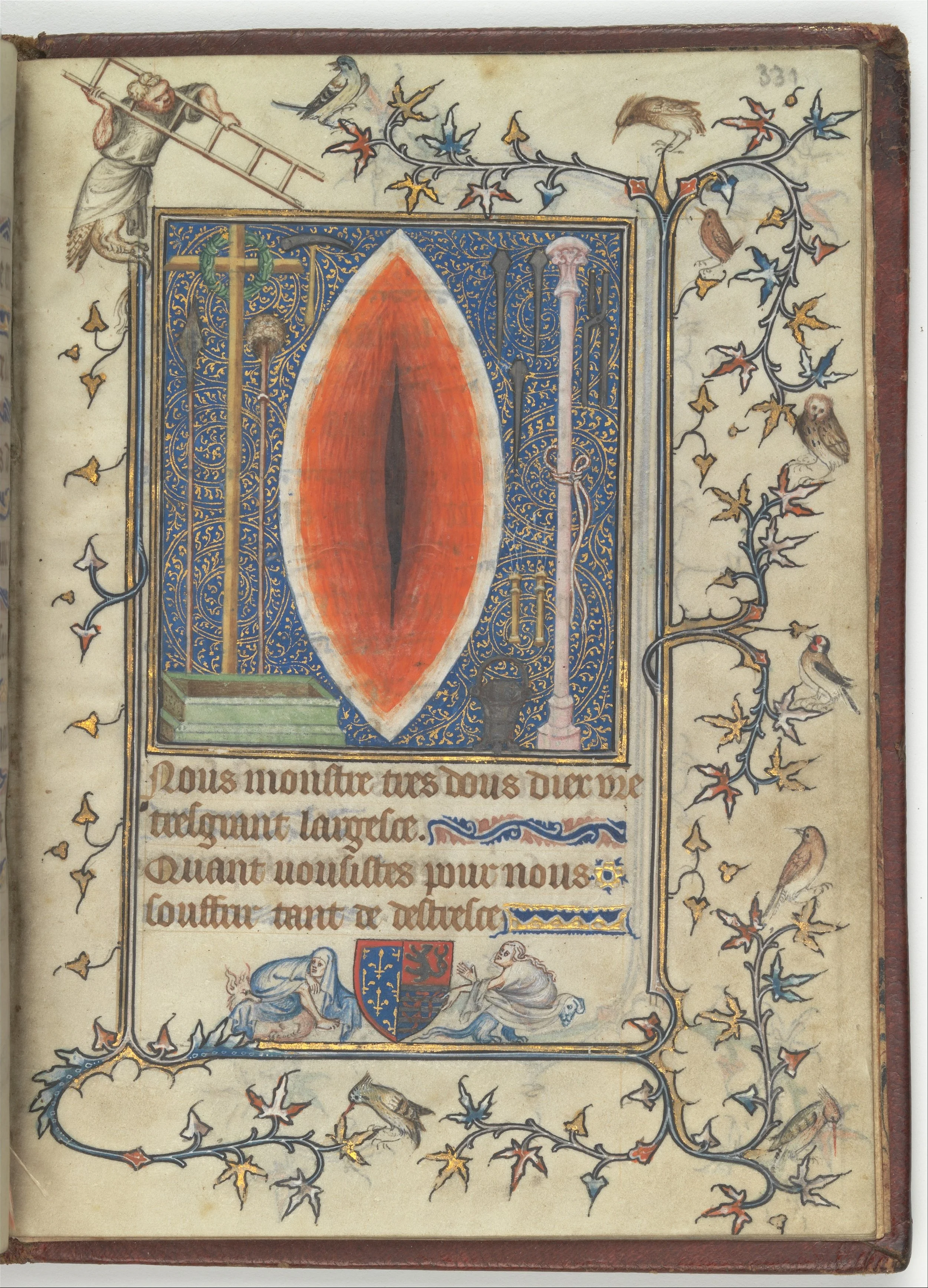
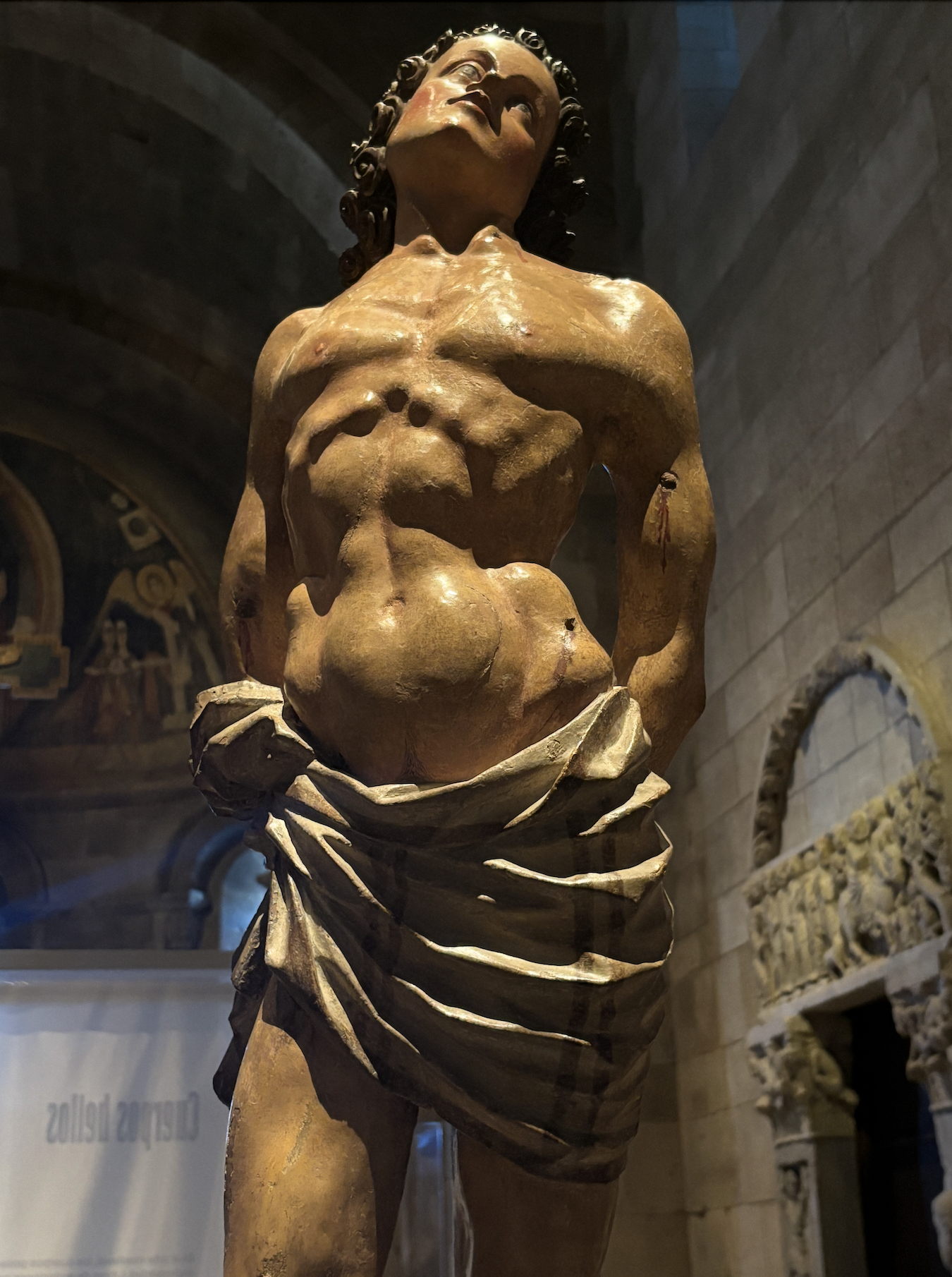
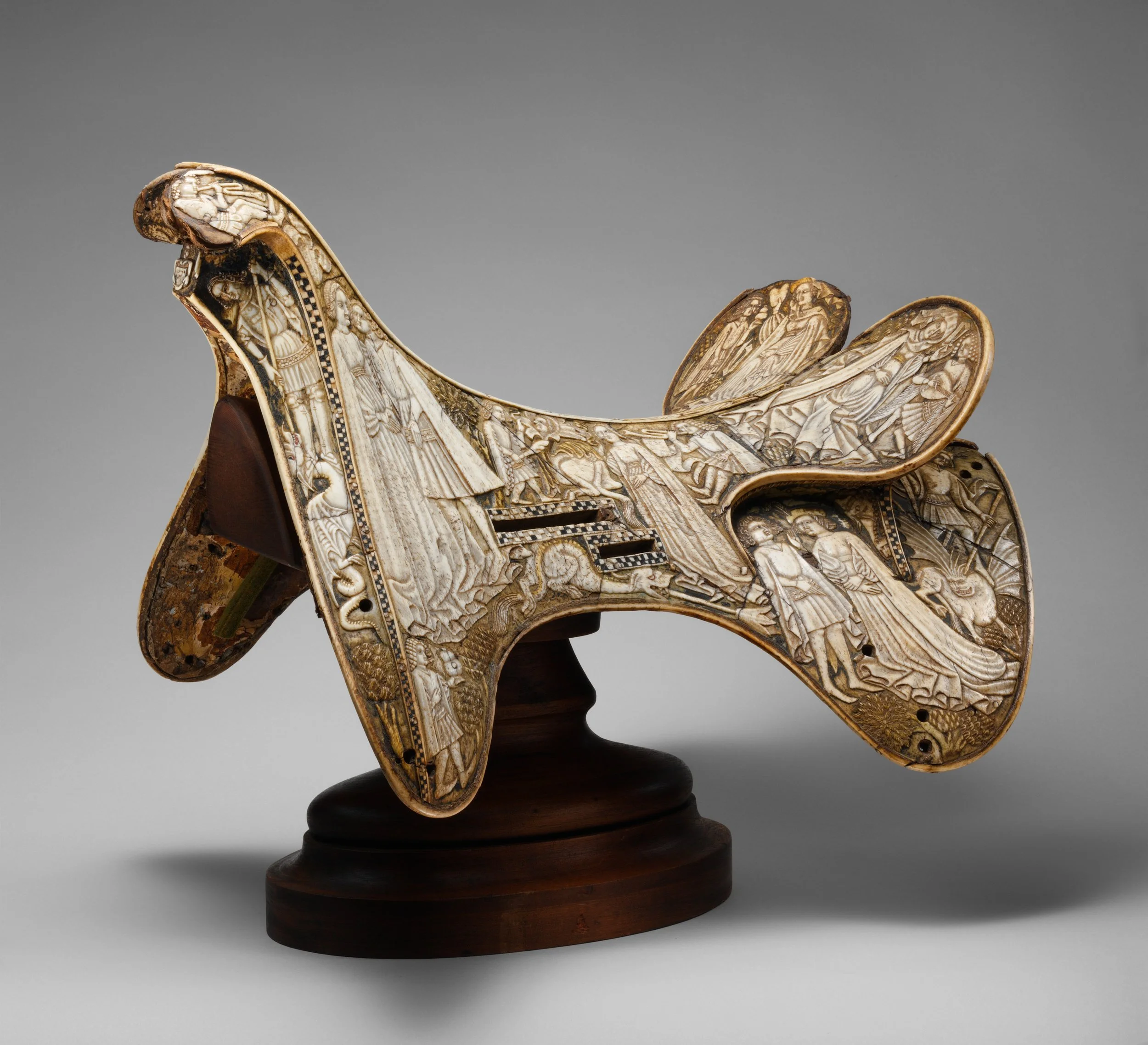
Featuring a curation of more than 50 objects selected primarily from The Met’s permanent collection (alongside a few items loaned from other institutions around the U.S.), Spectrum of Desire constructs a persuasive tale through a mix of mediums and materials. Though the focus is on items of Western Christian origins, the variety within this category is remarkably diverse, bringing together pieces that range from small-scale devotional objects and personal items like delicate gold rings, jewel-encrusted belts, combs, and small illuminated manuscripts to more substantial pieces like a recently restored (and hyper-realistic) polychrome sculpture of St. Sebastian or an ornate medieval horse saddle decorated with intricately carved bone plaques.
Diverse in subject, too, expected images of sacred figures and rituals of the kind typically seen in The Met’s medieval galleries are juxtaposed with those featuring surprisingly bawdy or erotic imagery. (During my tour with Nancy Thebaut, an Oxford University professor who co-curated the program alongside The Met’s Melanie Holcomb, I learned that these more controversial items are often kept in storage, excluded due to the ways they challenge accepted narrative.) Even more fascinating are the handful of pieces where these seemingly disparate subjects coexist in a single work.
The exhibition’s physical layout further reinforces these dichotomies. A labyrinthine placement of signs and vitrines transforms the Cloisters’ typically airy Fuentidueña Chapel gallery into a more intimate, albeit slightly restrictive, space. Divided into thematic sections like “Marriage, Sex, and Chastity,” “Objects of Desire,” and “Beautiful Bodies,” the curators again employ fabric, this time in the form of diaphanous white banners printed with soft blue text, to coax visitors along an intentionally narrative trail.
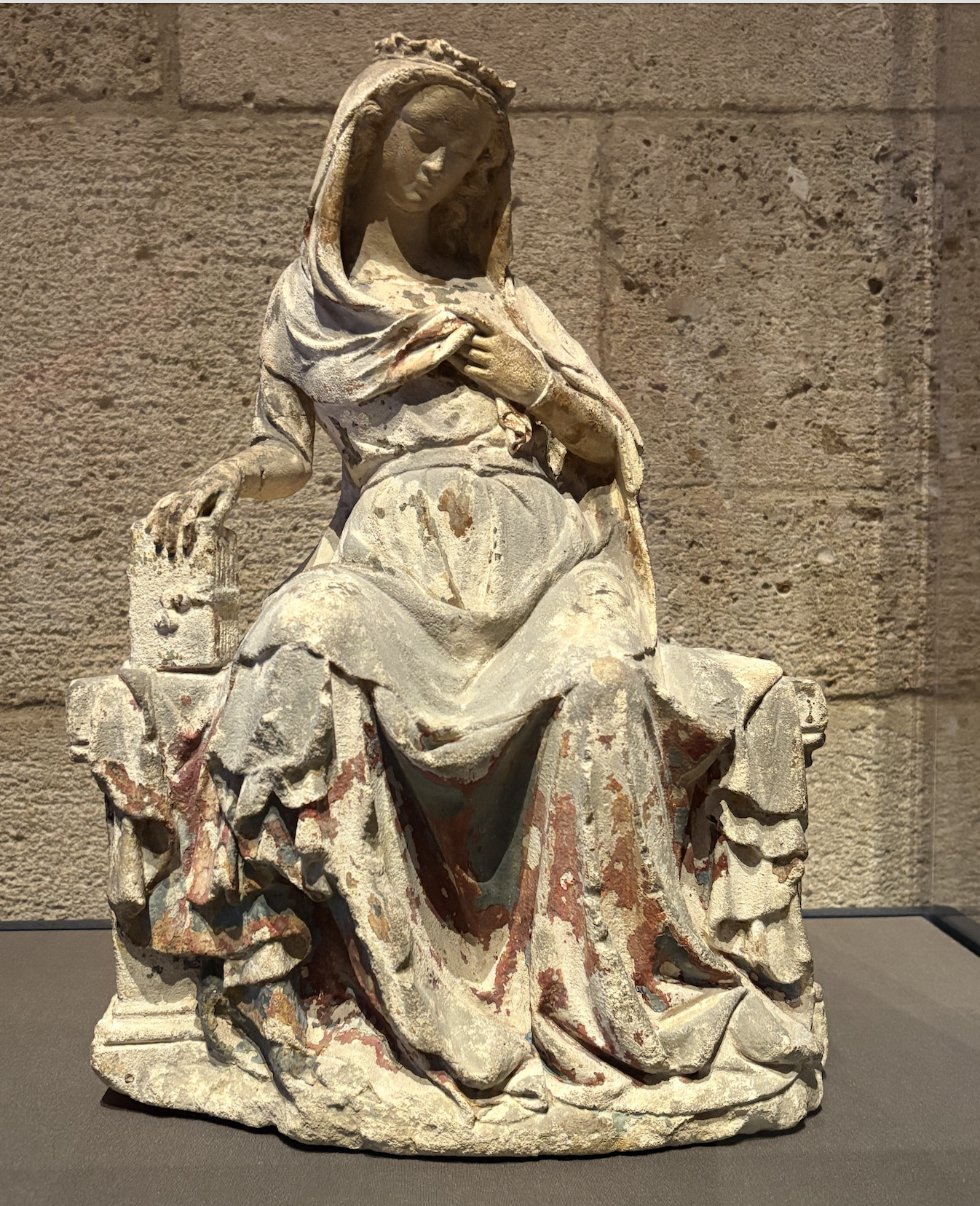
Virgin of the Annunciation, c. 1300, The Met Cloisters
While wandering through this path, it occurred to me that in contrast with the standard gallery walls of its sister museum, The Met Fifth Avenue, staging temporary exhibitions against a backdrop that is itself an object of study, comes with a unique set of challenges. From the practical—like lighting and the placement of wall texts—to the conceptual, it is an exercise in balance. On a few occasions, for instance, I wondered if some pieces in the room (like a 12th century carved wooden Torso of Christ hanging high up on a wall or the majestic wooden Spanish Crucifix) were permanent to the space or meant to be part of this specific curatorial story. On our tour, Thebaut noted the thematic organization of the space was designed to lead viewers step-by-step through increasingly risqué concepts. But the preponderance of right angles and narrow pathways created by the many vitrines and signs occasionally made the space difficult to navigate, leaving me wondering whether this thoughtful conceptual progression would be evident to those visiting the space without the privilege of a guide. And yet, there were also moments where the museum’s unique layout and history favorably added to the impact of the objects. The positioning of the arresting vulva-shaped Wound of Christ, just below the mandorla-shaped Virgin and Child fresco adorning the domed chapel ceiling, was, for example, a satisfying reiteration of the concept of divine fertility.
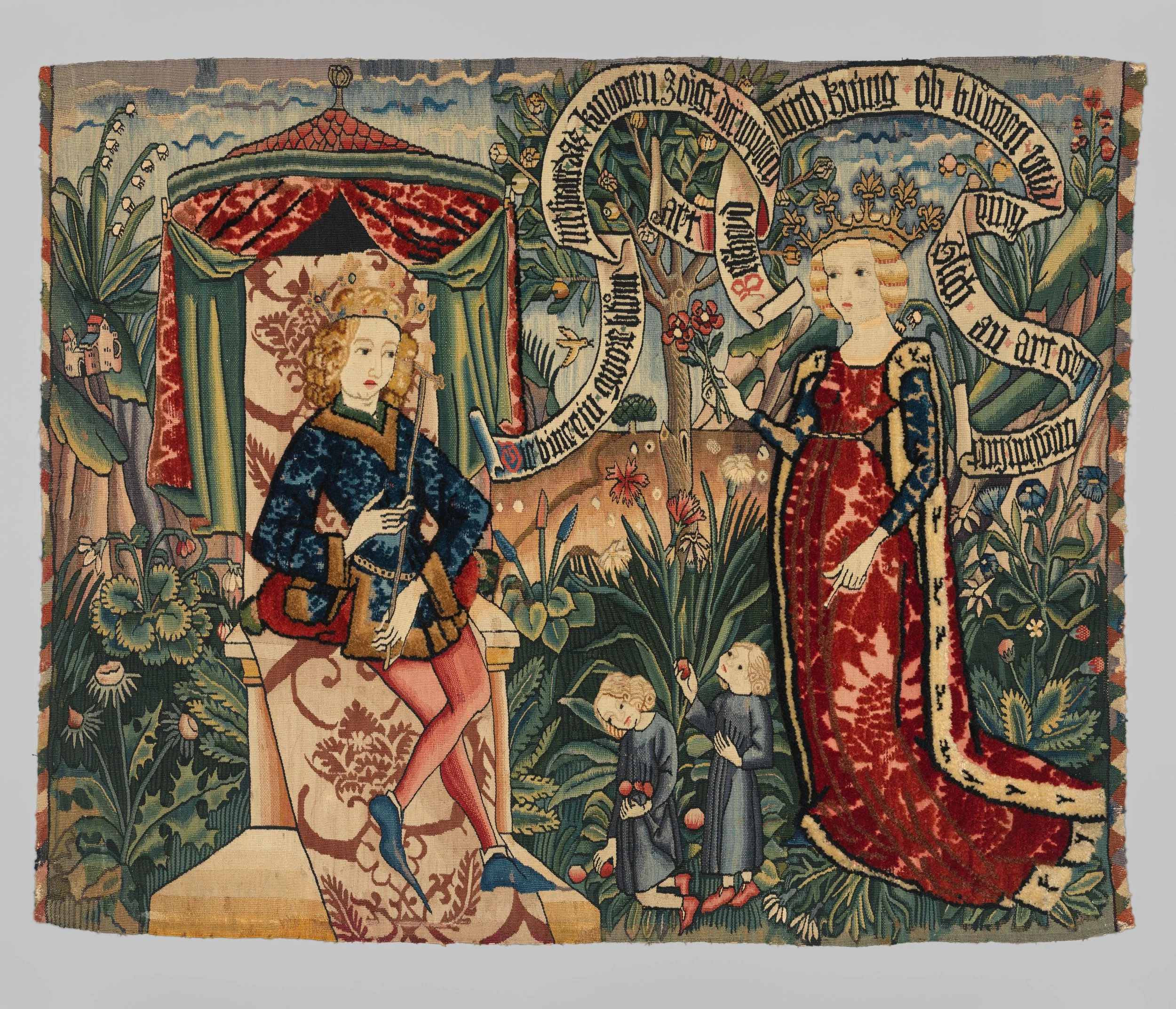
Two Riddles of the Queen of Sheba, ca. 1490 -1500, The Met Cloisters
Despite the few challenges, it’s unmistakable that the story being told here is groundbreaking. The underlying argument that thinking about gender is not a new idea is introduced at the outset through a late medieval tapestry titled Two Riddles of the Queen of Sheba (ca. 1490–1500). This richly colored textile adorned with shimmering threads and nubby textured reliefs depicts a Queen of Sheba attired in contemporaneous finery, testing King Solomon’s wisdom by asking him two riddles: how does one distinguish between an identically dressed boy and girl, or between a real and an artificial flower? As the accompanying text explains, Solomon’s response that “a bee will always fly to the real flower” and “a girl will always kneel when gathering apples,” suggests that gender was understood in the Middle Ages as something revealed through actions, rather than appearance.
For the curators, Sheba’s riddle serves a dual role within the context of the exhibition. Most significantly, the tapestry is presented as evidence that gender was an idea medieval people were actively thinking about, challenging myopic perception that these questions are an exclusively modern concern. Second, as the wall text notes, Solomon’s answer underscores the idea that gender is expressed and understood through behavior and actions (e.g. the girl’s subservience), “rather than physical appearance.”
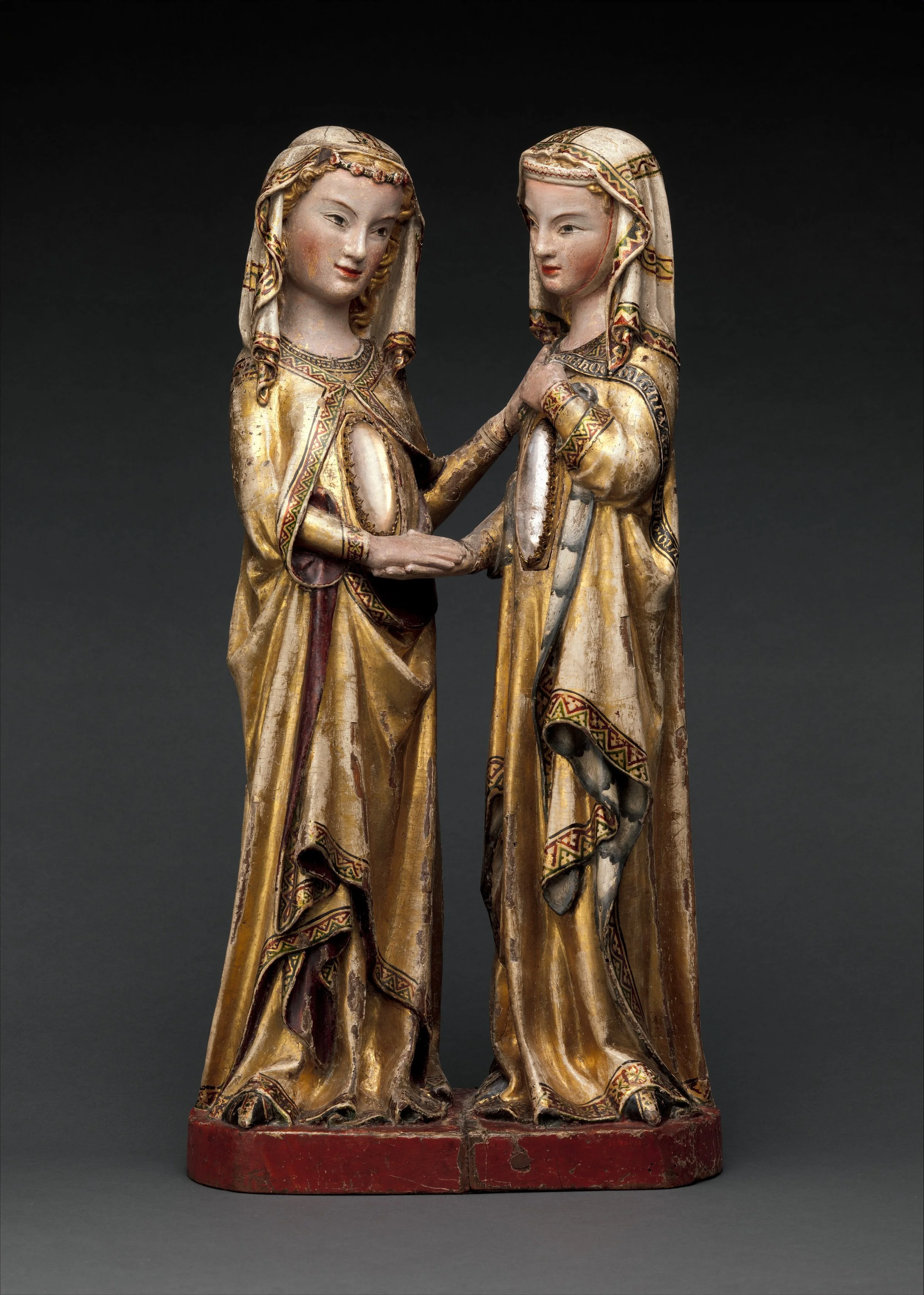
The Visitation, ca. 1310–20, The Met Cloisters
How these expectations and assumptions manifested, as well as the theme of gender as action rather than appearance resonates throughout the exhibition, as visitors encounter recurring motifs of poses, gestures, and attire, that signify or subvert relationships, roles, and identities. Early on, for example, we are introduced to the clasped hands and coy gestures of courtship through a late-15th century German oil painting of a bridal couple. Reminiscent of Jan van Eyck’s Arnolfini Portrait. This work shows a betrothed couple, the groom’s arm clasped protectively around the woman’s waist, a leg turned possessively toward her, their fingertips lightly connecting. Though these physical expressions of affection and union are hardly surprising, moving through the works, the gestures reappear in increasingly unexpected contexts.
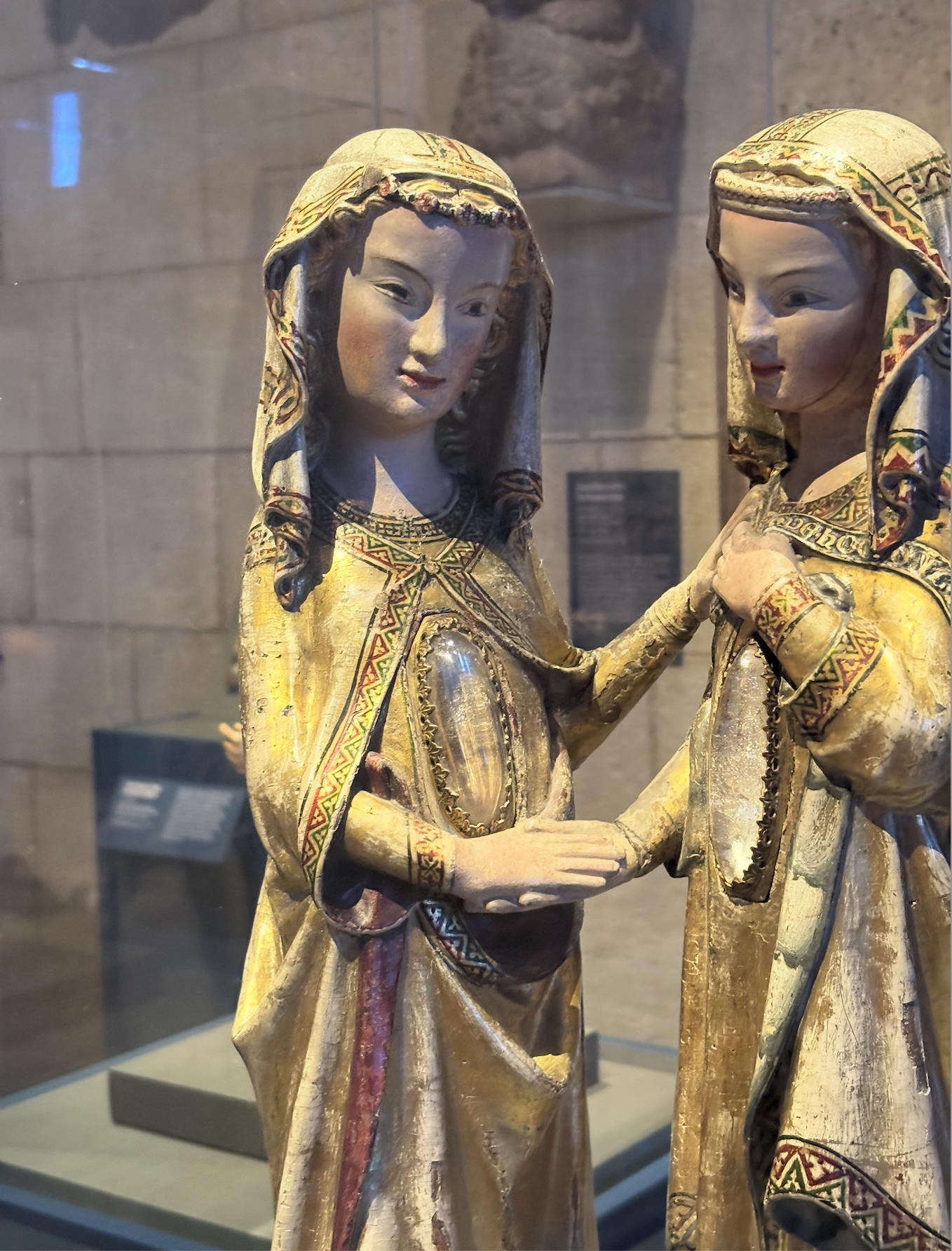
In The Visitation (c. 1310 – 20), a sculpture from the Swiss convent Saint Katharinenthal, the Virgin Mary and her cousin Elizabeth are depicted holding hands in, as the text notes, “a gesture resonant of a betrothal,” much like the couple in the German painting. The theory presented alongside the work is that this gesture, coupled with the sculpture’s convent provenance, indicates “a sense of same-sex community, spiritual kinship, and, potentially, desire.”
Whether we accept the argument or not, it is difficult to deny a semblance of plausibility in the curators’ claims. This is perhaps a testament to the exhibition’s narrative, carefully constructed through the placement of objects and the interplay of themes that invite viewers to reconsider the ways medieval art expressed relationships, identities, and desires.
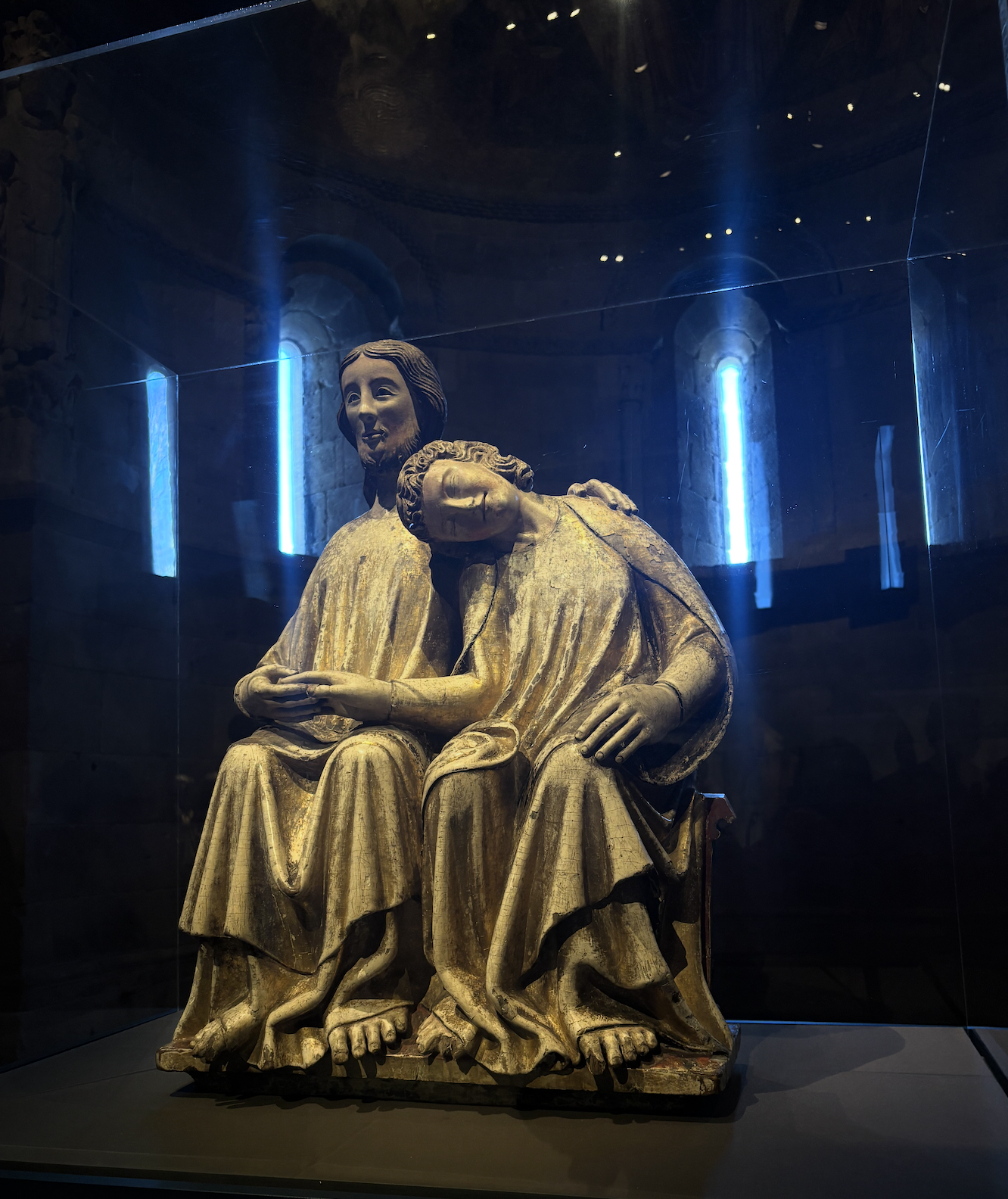
Christ and St. John the Evangelist, c. 1300, The Met Cloisters
The intimate embrace between Christ and St John the Evangelist (c. 1300), positioned in the altar space, is a striking culmination of this curatorial journey. Their clasped hands, reminiscent of courting lovers, and St. John’s subtly feminine features challenge traditional interpretations of sacred imagery, offering a bold yet visually compelling perspective on the fluidity of gender and the complexity of human connection in the Middle Ages.
Spectrum of Desire’s success as an exhibition rests on the way that it does not demand agreement, but rather encourages dialogue and new ways of thinking, urging us to look beyond the surface and engage with the layered meanings embedded in medieval art.
At its core, this exhibition can be considered an invitation to both scholars and museum visitors alike, challenging us to move beyond reductive understandings of the Middle Ages as a period defined solely by religious austerity and to embrace the intricacies of its cultural and artistic legacy. The exhibition’s thematic organization and thoughtful placement of objects within the Cloisters’ sacred space further underscore the dynamic interplay between historical context and contemporary interpretation; one where bold claims like the interpretation of same-sex desire in sacred imagery open new avenues for inquiry into the ways medieval art navigated the boundaries between the public and private. In doing so, Spectrum of Desire reminds us that the study of art history is not an act of preservation or repetition, but something dynamic and continuous that never ceases to reshape our understanding of the human experience across time.