Dear Lars,
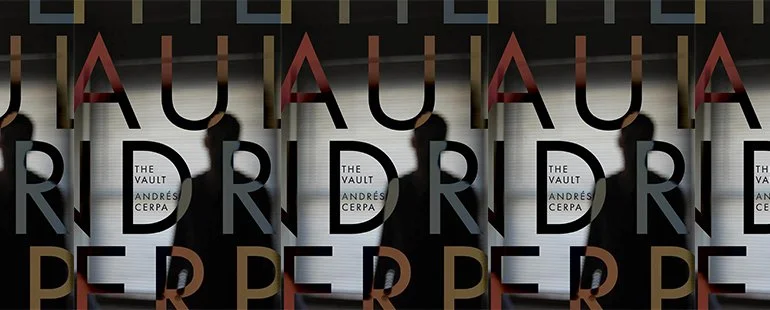
I remember you telling me Cerpa is Puerto Rican, and I was particularly looking forward to spending time with his work here in this dearth of Latino-ness. Even when there is nothing specifically “Latin” or “Puerto Rican” in the work, I always have this underlying sense that somewhere along the line there must be a dash of commonality. Even something as tiny as a type of food, a phrase, a tradition, a habit. Something in the recipe of this person that mirrors the recipe of my person that eventually sneaks into the work itself like a form of common terroir. Not that this equals knowing.
One of our filming days here is set aside as a “Promo Day,” where we do things like photoshoots for the show poster and ads, video interviews with the publicity team, etc. (This may feel like a digression, but I promise it’s not.) One question I’m asked over and over is “How does food build bridges between cultures?” I hate this question because it oversimplifies and makes assumptions…
Read MoreOctober 2024
Nashville, TN
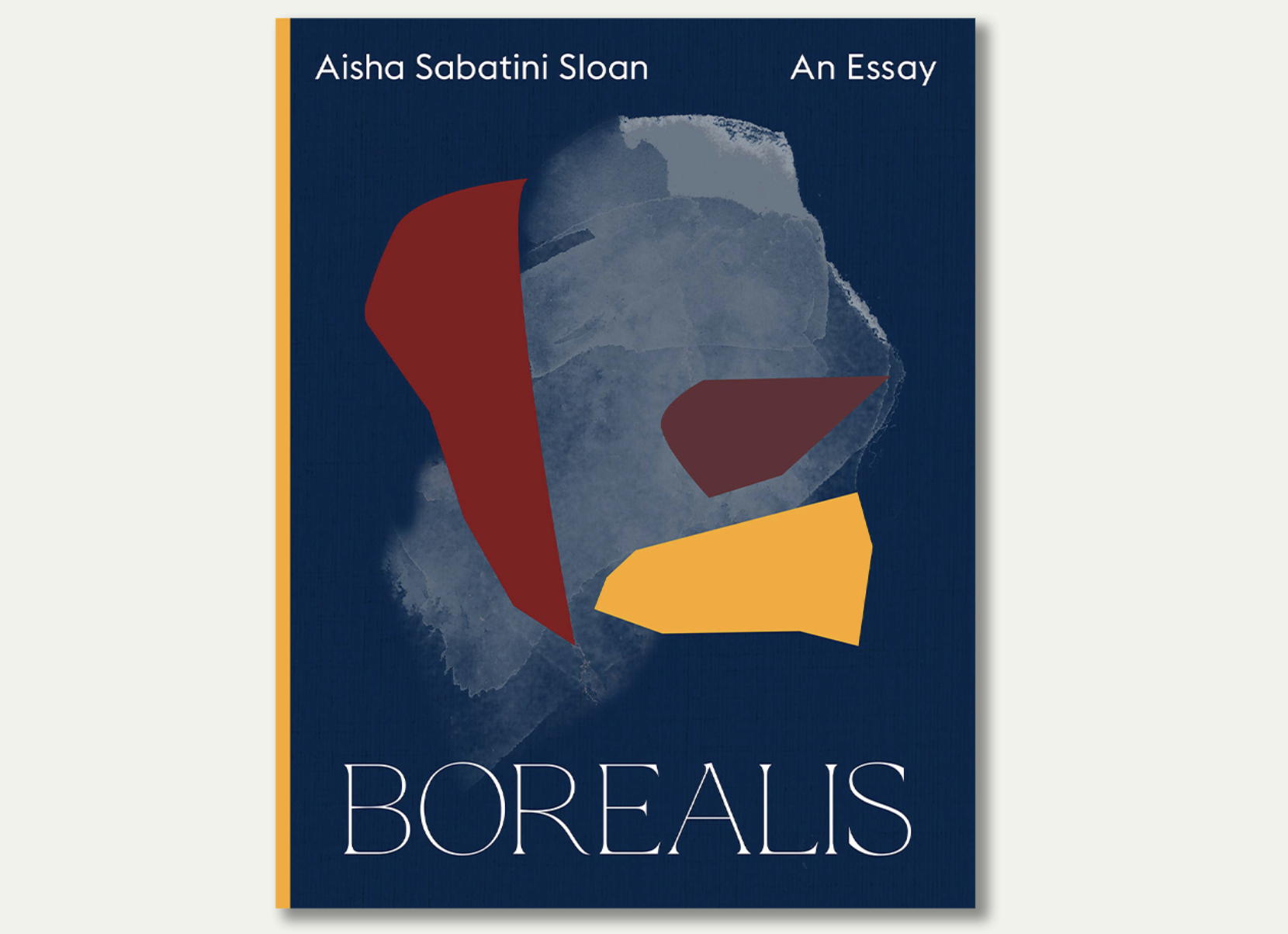
In Response to Borealis by Aisha Sabatini Sloan
Dear Lars:
It occurs to me that we never discussed specific parameters for this reading journal, but I feel drawn to a letter format, partially inspired by the letter-style foreword to Aisha Sabatini Sloan’s Borealis.
That was, in fact, the first thing that struck me about the work. It’s something I can’t recall ever having seen before although it makes perfect sense. I suddenly feel like every foreword is in some way, a letter, (signed, dated, in conversation with the work, etc.) though I suppose they usually addresses the reader rather than the author. I like this new-to-me approach and feel like it’s something I may want to use in the future when writing introductions or blurbs—I’m often stuck with what/how to write and suspect the idea of framing it in my mind as a letter to the author could prove helpful.
One of the other things I noticed as I started to move through the work was a feeling that I was reading the structural mirror image of Jenny Bouley’s The Body: An Essay. There we had footnotes with no essay; here we have a highly referential essay with absolutely no explanatory footnotes.
Reading Borealis, I felt equally unmoored, with…
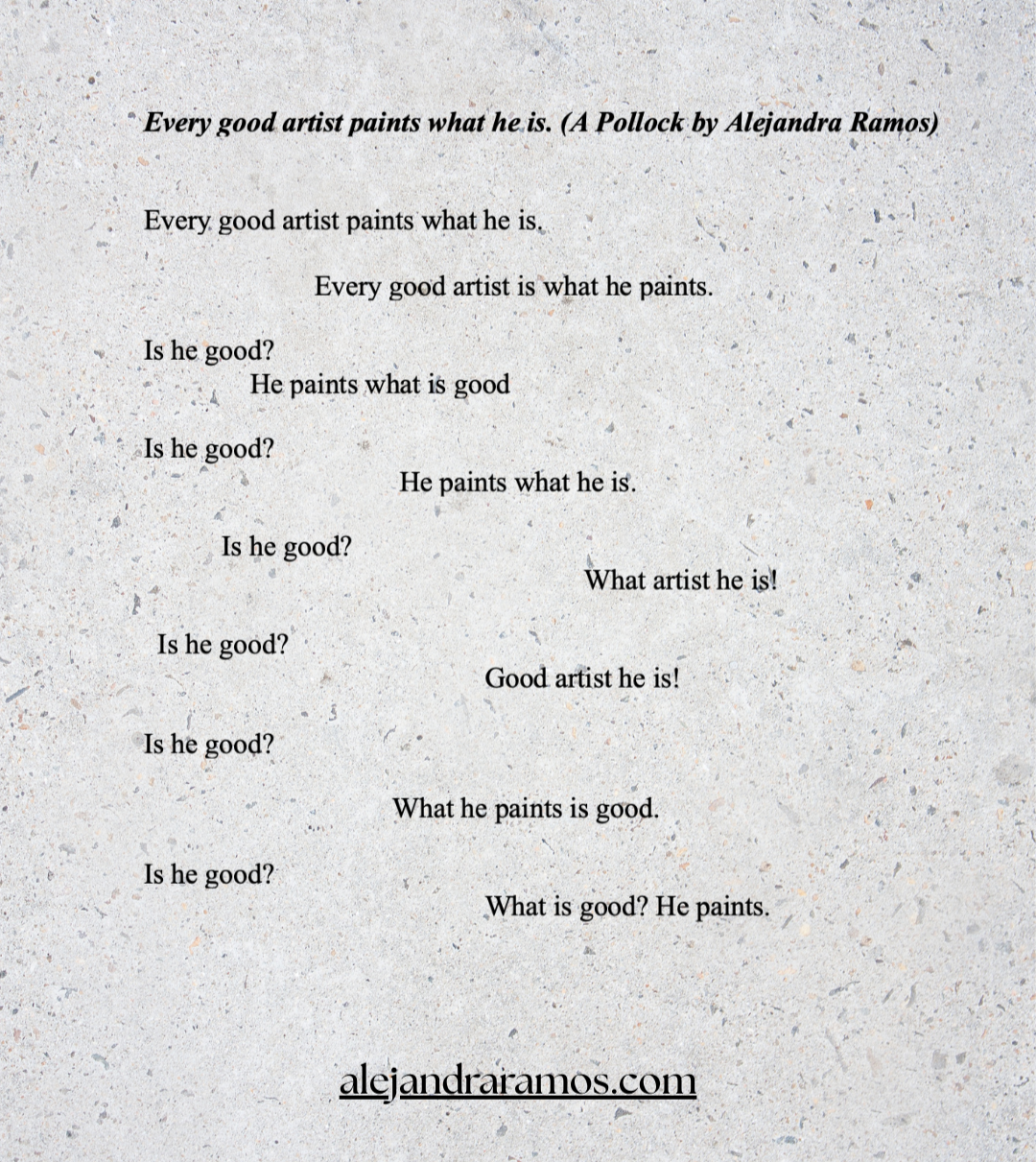
Read MoreCreated by the poet, curator, and art critic, John Yau (b. 1950), a “Pollock” is a playful and inventive poetic form that pays homage to the work of the abstract expressionist painter Jackson Pollock (1912 - 1956). The “rules” are simple and reminiscent of Pollock’s own methods. Yau first used the form in a poem called “830 Fireplace Road: Variations on a sentence by Jackson Pollock.”
A Pollock is a 14-line poem that must begin with a line or quotation said by the artist. This initial line serves as your poetic painter’s palette, so to speak, from which you will then create the subsequent thirteen lines…
Read MoreIt begins with a canvas covered from end to end, a single color.
Perhaps orange? Perhaps blue.
(Echoes of a long-ago lesson about restoration: the solid and color-blocked works are more difficult to restore. The simplicity puts the emphasis on the brushstrokes and texture, the errors more noticeable, the damage, the aging, the chips, the fades.)
The canvas is of an average size, slightly larger than a large book, something that can be carried.
(That is the main rule of this.)
We’re calling it reckless and it is a co-creation with accident.
Read More