Dispatches

On Bluets

On Bluets

“There was a time when I would rather have had you by my side than any one of these words; I would rather have had you by my side than all the blue in the world.”

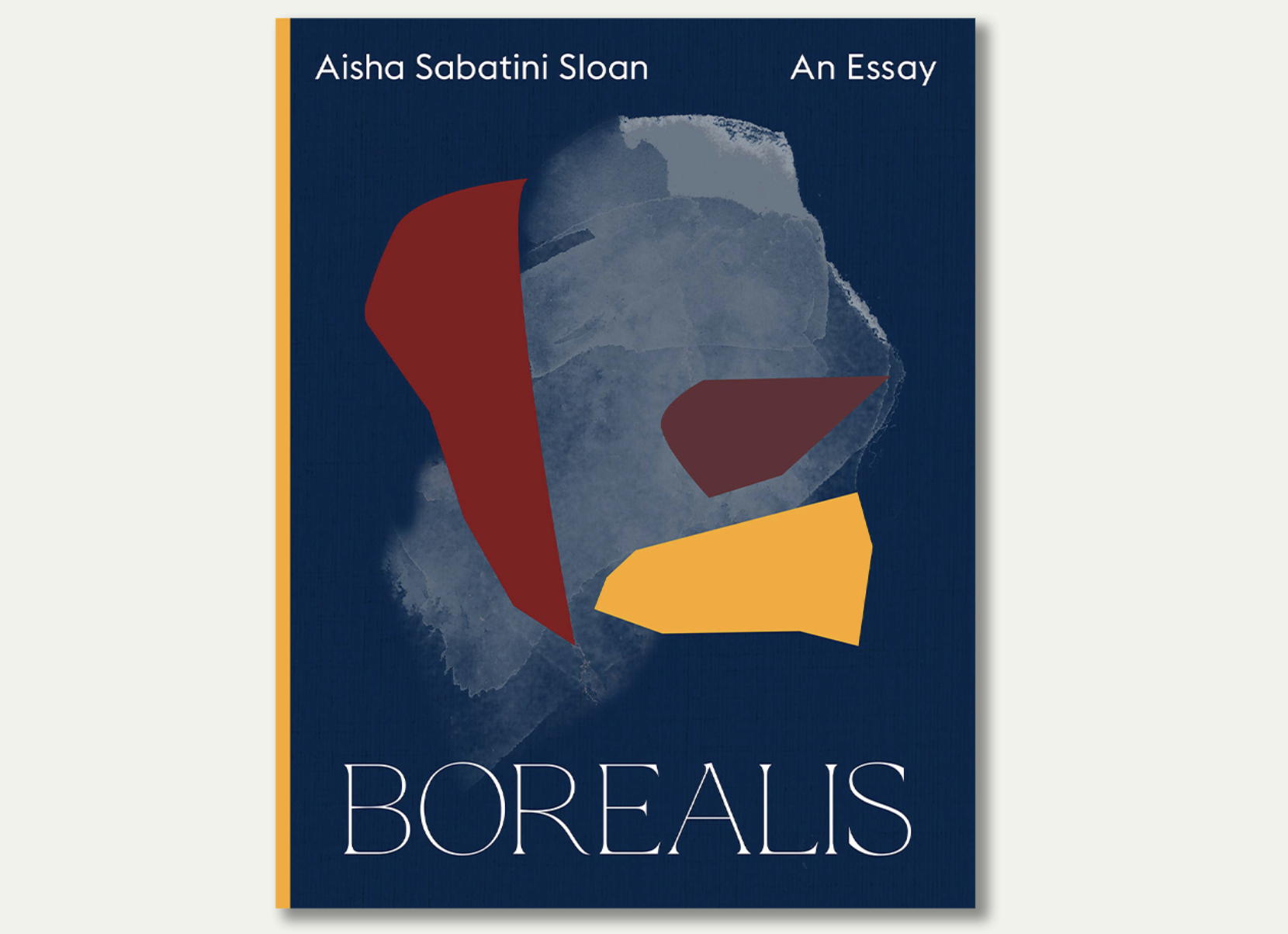
I chose Bluets because I wanted to learn how to let go of a dream.

In the first version of that sentence, I wrote: a dream that no longer fit, but then went back and removed that part because it’s not really that the dream doesn’t fit; it’s simply that I want to wear something else, regardless of how good the dress looks.

(Then again, multiple things can be true because I can also think of all the ifs that would have made me want to keep wearing that dress.)

I try to explain this to my best friend, but he doesn’t understand because so many of the ifs went his way. Our conversation keeps getting interrupted because HBO and Hulu are in a bidding war over one of his films. When he returns to the table I say: it doesn’t make sense to you because the same people who keep offering you more, keep offering me less.

Read More

On Dance as Embodied History

On Dance as Embodied History

When I took my seat at The Joyce Theater earlier this afternoon for a performance of Ayodele Casel’s “The Remix,” something felt very familiar. It was my first time in that performance space, seeing a new-to-me artist, but I couldn’t shake an overwhelming feeling of familiarity. I searched my eyes along the stage, which was dotted with cozy arrangements of chairs and pillows, a clothing rack, an old black & white style box TV. In the background, a DJ was playing music that, while not recognizable as a specific song, again felt familiar. Not quite déjà vu, but close.

The show hadn’t started yet, but some of the dancers were mingling around, stretching, moving and testing out steps. Soon, Ayodele Casel came out on stage, and began to address the audience, talking about her life and memories as a “black and Puerto Rican kid born in the Bronx,” sharing a poem she wrote referencing days spent at Nuyorican Poet’s Café in her 20s, and expressing her deep-seated childhood desire to be a part of all this (spoken with arms spread out wide over the stage, the theater), I understood that what I’d been feeling was a sense of shared memory—shared desire. A recognition of knowledge existing under the surface of the performance, which was about to tell a story so similar to my own.

Read More

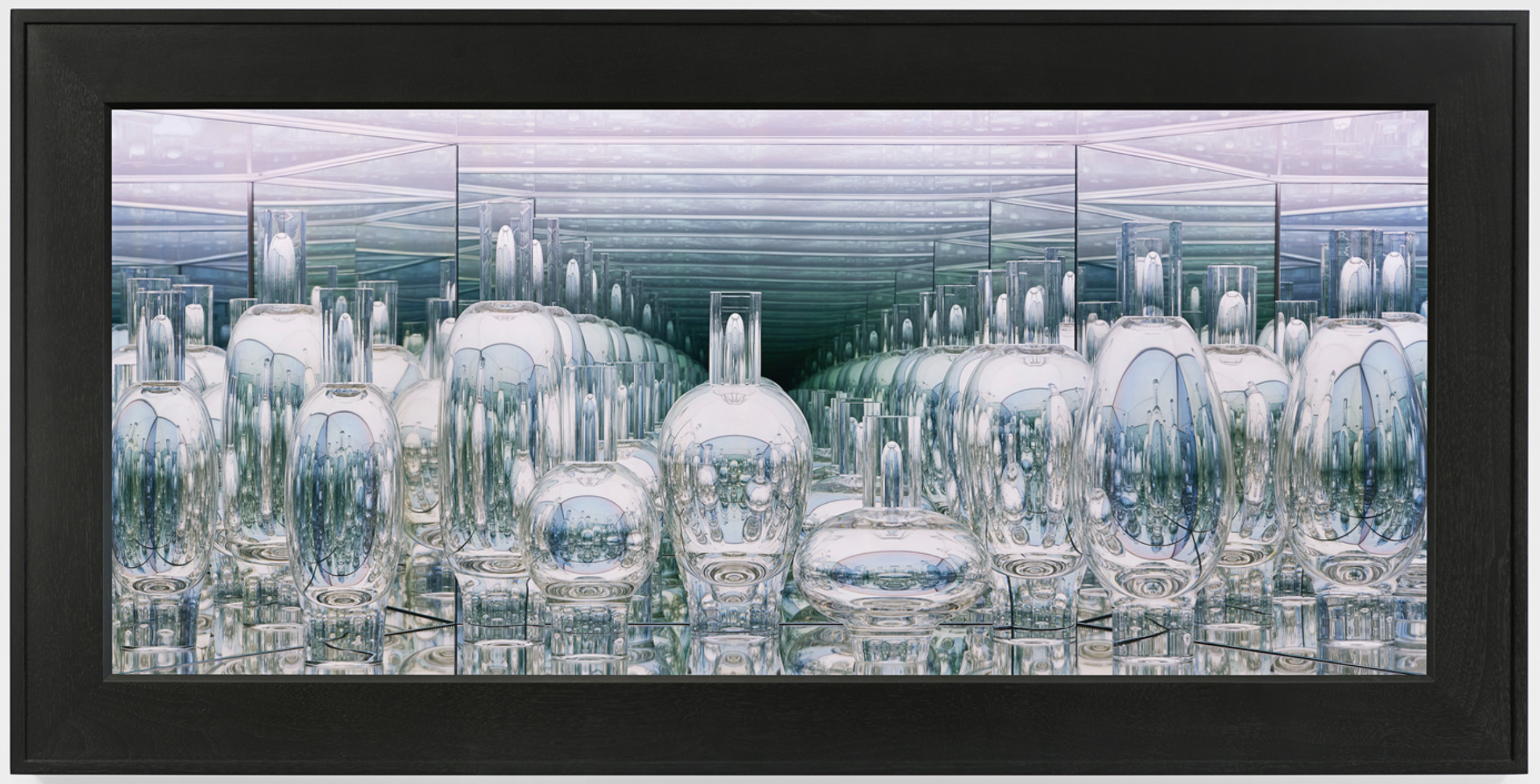
Josiah McElheny's “From the Library of Atmospheres II” 2025

Josiah McElheny's “From the Library of Atmospheres II” 2025

It takes me a few minutes to understand why I feel so uneasy in front of Josiah McElheny’s “From the Library of Atmospheres II.” a sculptural glass assemblage at James Cohan’s 48 Walker Street gallery. It is, I finally realize, because though I am fully aware that I am peering into a world of glass and mirrors, my reflection is missing. Like a child or a puppy encountering an unfamiliar object, I keep stepping closer and further away from the work, tilting my body from side to side, as if convinced that by finding the correct approach I will solve the puzzle presented.  

My efforts are in vain. I feel like a vampire. A ghost in the gallery.

McElheny achieves this haunting effect with a simple trick; the clear glass window I am looking through is in fact a two-way mirror like the kind in tv detective show interrogation rooms (perhaps also real ones; I’ve not had the pleasure). Observing this work, I’m intensely hyperaware of my presence in relationship to the art. I am removed, on the outside looking into an enclosed world where McElheny’s carefully arranged hand-blown bottles exist in their own mirrored isolation. It is also an interrogation room of sorts; the bottles in ongoing conversation and observation with themselves—a self-interrogation, an, as McElheny describes, “infinite narcissism.”

Read More

Blue Accidents

The grocery store sends a carton of blue eggs instead of the ones I usually buy. These blue eggs are more expensive, but the store doesn’t charge me the difference. The packaging celebrates the blueness, but the reality is disappointing. Blue chicken eggs only appear blue in contrast to the brown and white chicken eggs. They are not like robin’s eggs which are so distinctly blue that a shade of blue is named for them. Nobody paints their walls Chicken Egg Blue. Eggshell paint, like nude stockings and stilettos, is assumed to be a shade of white.

I look this up to confirm and learn that while, no, there is not a paint called “Chicken Egg Blue,” there is one called “Duck Egg.”

I feel about the blue eggs the same way I felt about the Blue Spruce, which I read about before I saw, imagining a sparkling ultramarine tree. Years ago, I filmed a TV show in the hangar where Howard Hughes built a plane that couldn’t fly. When telling this story, I invariably mix up the plane’s name with the tree’s name.

Goose eggs are always white, but now I have an idea for my sculpture.

Read More

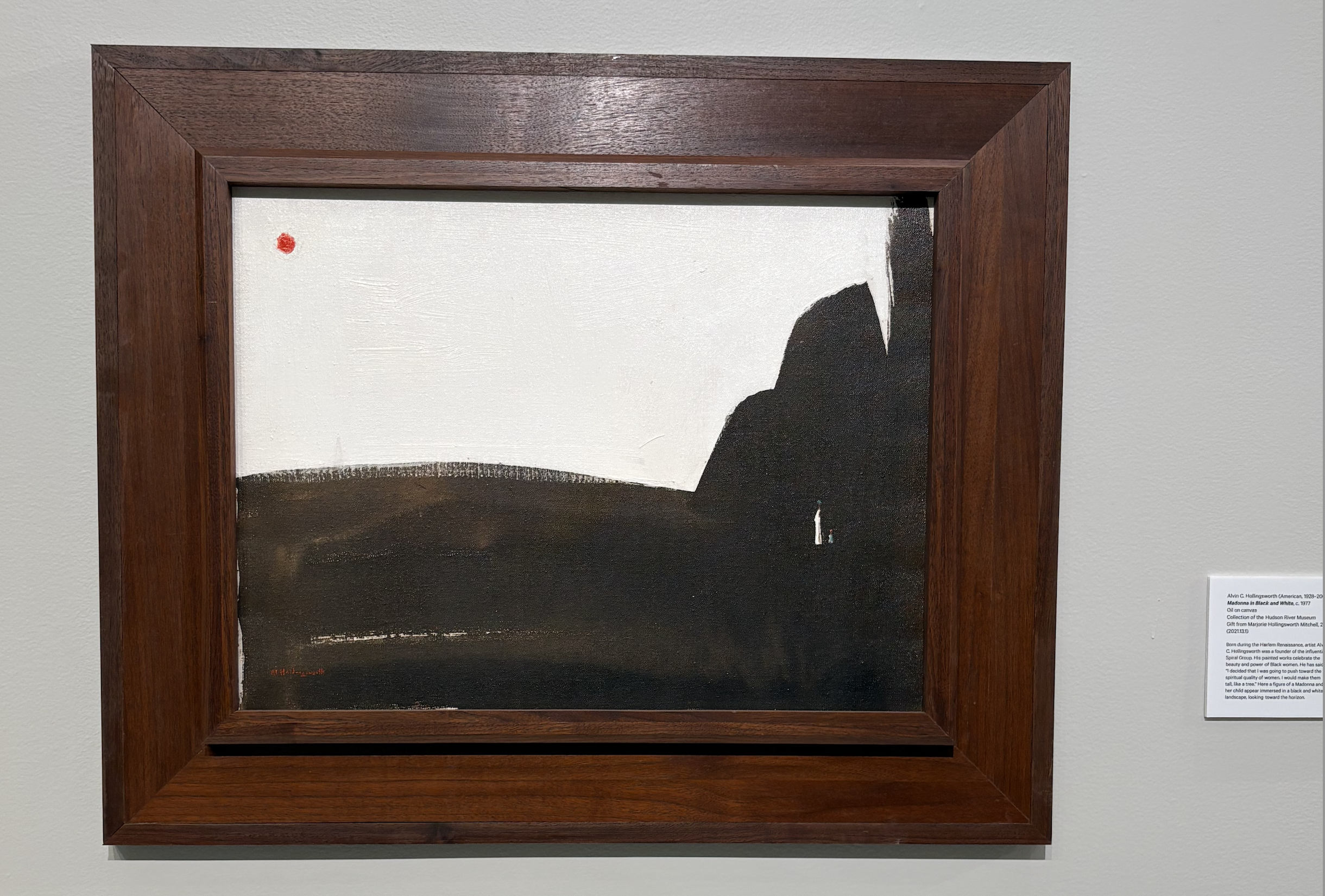
Madonna and Child by Alvin C. Hollingsworth

It’s only on the third visit that I finally see it. The tiniest little figures, barely larger than matchsticks, on a field filled with large swaths of black and brown. During my first and second views I’d assumed the painting was an abstraction, the black mountainous streaks standing in for the mother and child. A comment on mother nature and the earth, I surmised. It’s not until I wandered past and looked closer that I realize the truth of it; the tiny little streaks of white are the point. In an instant, the piece has become my favorite.

They remind me of worry dolls. The tiny matchstick dolls clothed in scraps of colorful knit fabric my grandmother bought for me from a museum gift shop during a family vacation. They came in a little yellow box, smaller than my childhood palm, tucked along an instruction card explaining that I could whisper my worries and concerns to the dolls before bed at night, leaving them to rectify the situation as I slept.

On the walk home from the gallery I think about the miniscule mother and child, and wonder what it is about it that I find so enchanting. It reminds me of one of my favorite paintings, Virginia O’Keefe’s Black Abstraction, which depicts a tiny white dot in a black abyss. Forever attracted to the horror of the sublime, terrifying reminders of just how small and inconsequential we are.

(In my early 20s, I moved to Firenze to attend culinary school. After sleeping most of my first day, I woke up in the morning and turned on the TV in time to catch a meteorologist giving the weather report on a news program. She wore a blue dress and pointed to a boot-shaped map I’d previously only seen in textbooks and globes in my high school classrooms. I knew where I was, but it was only seeing the map that I realized I had crossed an ocean alone and for the first time in my life didn’t know a single other person anywhere on that entire continent.)

Ornithology

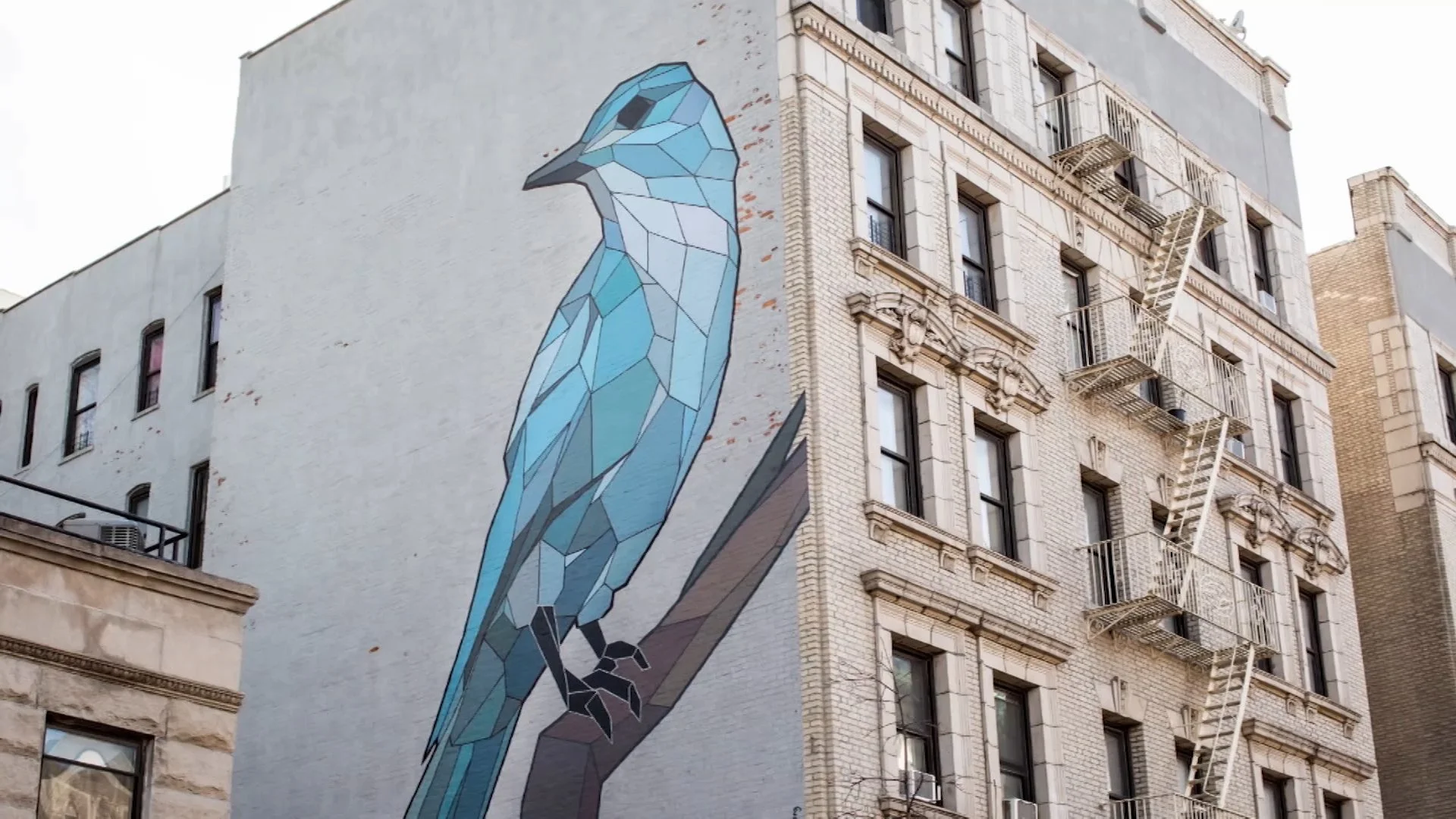
Eugene updates me on the mural progress while I’m away filming. He takes our dog Jojo for his afternoon walk around to the place where an artist named Dan has been filling the building’s recently renovated retaining wall with a pattern of geometric birds. The mural was commissioned in collaboration with the Audubon Mural Project by our board in honor of our friend and longtime resident Sandra who passed two year ago from cancer. She was an artist—a gilder—and one of the most vibrant members of our little community who was always the first to organize building holiday parties and summer socials in the garden. The plan for this mural had been in the works for a while; after months of delays, I was surprised to hear it had finally started in earnest. I ask how it looks and Eugene sends photos, blurry because Jojo is pulling on his leash and because taking photos is merely logistical to him. A visual transfer of information. It’s: which of these shampoos should I buy? It’s: which looks better with these pants—the gray sweater or the navy?

I look at these on the ride home from work, sitting in the passenger seat of a car being driven down dark rural Tennessee roads by a PA named Claire.  The brightness on my phone is too high and the colors fill the car with light. I’m exhausted because I’m stretched beyond my limit this month, but looking at the photos I feel a pang of disappointment.  A sign-up sheet in my building lobby had been asking for volunteers to help paint and I’d wanted to sign up. I wanted to take part in this community art.

            Our neighborhood is filled with these bird murals, which are part of a long-term art project that I admittedly don’t know as much about as I should by this point. “The Audubon guy lived around here” I explain when visiting friends ask about the giant birds on walls and garage doors and rolling store shutters. “He’s buried in the cemetery at the corner of my block.” My knowledge about this is very vague, caught from bits of information I’ve read here and there—I know Audubon’s legacy is “complicated” (read: racist) and that education about this is part of the project. I know the murals are done by a variety of local artists who each work in their own individual style, but that each mural features an actual species of bird. The quality varies. Some are majestic. Some are playful. Some are a little wonky.  A handful are, frankly, hideous.

            I have my favorites—a blue jay rising over a 99-cent store on 151st by the artists Mary Lacy. A pair of chunky orange and yellow warblers near the 157th subway by George Boorujy, and a mosaic-sculpture hybrid by Jessica Maffia on 173rd made of foraged-glass mosaics that spell out the American robin birdsong in the form of a spectrogram. The mosaics are tucked between a v-formation of six outstretched cast hand sculptures in a shade of brilliant robin’s egg blue. In the 15 years I’ve lived in this neighborhood, these birds have become parts of my day; surprises to wonder about while running errands, walking the dog, visiting friends, sitting in traffic. A sixth story flock of birds covers an entire building facade at the light where my Uber usually turns off the main avenue toward my block. When I see them after a long day I mentally start to relax knowing it won’t be long before shoes off, bra off, a snack, the couch.

Art in the Hospital Corridors

My husband Eugene had surgery last Tuesday. It was a long-planned, minimally invasive procedure that went extremely well, but which did require a few days of post-surgery hospitalization at NYU-Langone Hospital. As his support person, I also spent the better part of last week at this hospital, which I quickly learned (much to my surprise and delight!) has a rather extensive visual art collection of paintings, collages, photographs, murals, and sculptures installed throughout its campus.

The most well-known piece in the hospital’s collection—even to those who have never stepped foot inside the building—is Spot! by Donald Lipski (2018). A four-story sculpture consisting of a giant Dalmatian puppy balancing a yellow taxi on his nose. The dog portion was made from a modeled frame, while the yellow cab is an actual ready-made Prius taxi that was donated by Toyota to use in the sculpture. Located at the children’s hospital entrance on 35th street, the dog is meant as a playful and encouraging welcome for the children coming in for procedures. In an interview about the piece, Lipski explained that the sculpture of a brave doggy “achieving the impossible” was meant to inspire children during a frightening moment in their lives. (When reading about the piece, I learned that during the height of Covid-19, they added a large NYU-purple mask over the dog’s mouth to encourage children to do the same.)

Glissando, 2013

I spent a lot of time thinking about what kind of art one would want in a space like a hospital; a place where events wonderful and terrible, mundane and terrifying, joyful and heartbreaking are constantly and simultaneously occurring. Unlike the usual bland wall décor typically found at corporate hotels or standard doctor’s offices, the pieces at NYU-Langone don’t exist just to fill wall space. This is art that feels engaging, varied, and thoughtfully selected. It is work that seems to have things to say, though never so much that it pulls focus or takes over the room. The art is there to support the mission; it is not the purpose itself.

Unlike the deliberately bold Spot!, the majority of the works I saw in the adult spaces of the hospital avoided the figurative and leaned toward total abstraction. Like the iridescent twisting waves of The Moon’s Eyelid by Alyson Shotz (2018), the bright screen-printed color stripes of Royal Curtain by Gene Davis (1980), or the Turkish onyx twists of the sculpture In Pursuit by Leon Axelrod.  Emotionally, the works are overwhelmingly calming, often encouraging, playing with color, shape, texture, and light in ways that allow for joy without demanding it.

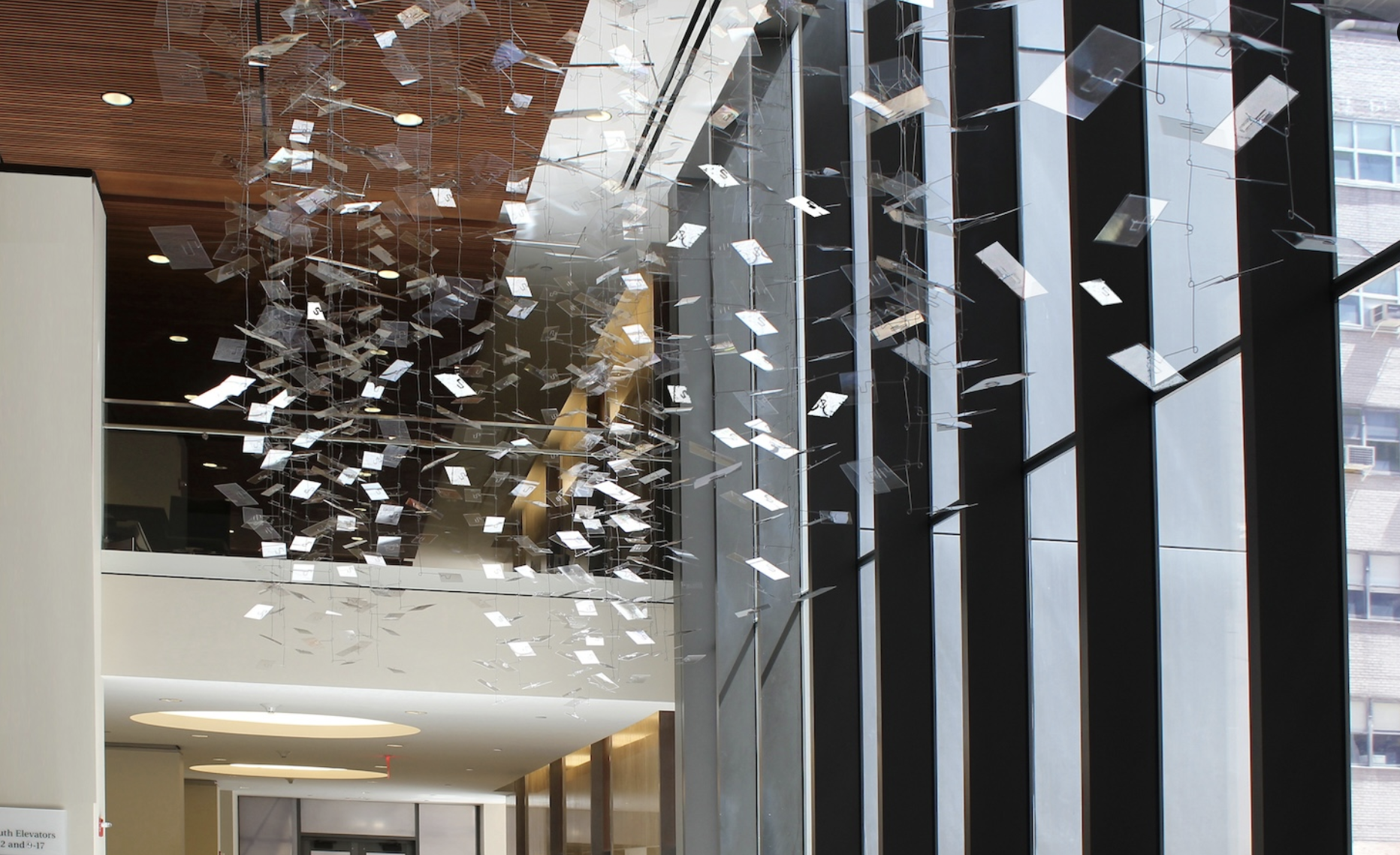
My absolute favorite of the pieces I saw while my husband dozed in his anesthetized stupor is the sunlight-catching Glissando, a 2013 mixed-media installation of clear polycarbonate Lexan squares suspended with thin stainless steel and aluminum wires. By the artists Tim Prentice and David Colbert, the piece stretches and cascades over the sunny lobby connecting the hospital’s Kimmel and Tisch buildings. In many ways, this silent musical performance seems to best capture the spirit of a collection that is ready to come alive and share its stories with anyone interested enough to pay attention, but just as easily recede into silence for those with other, more pressing, concerns.